A sunny window can make a room feel welcoming, but it can also bring unwanted heat, screen glare, and a clear view into your home. Window film offers a way to change how existing glass performs without replacing the entire window. Different products address different needs, from reducing solar heat to creating privacy or helping retain broken glass. Understanding those differences makes it easier to choose an upgrade that suits each room.
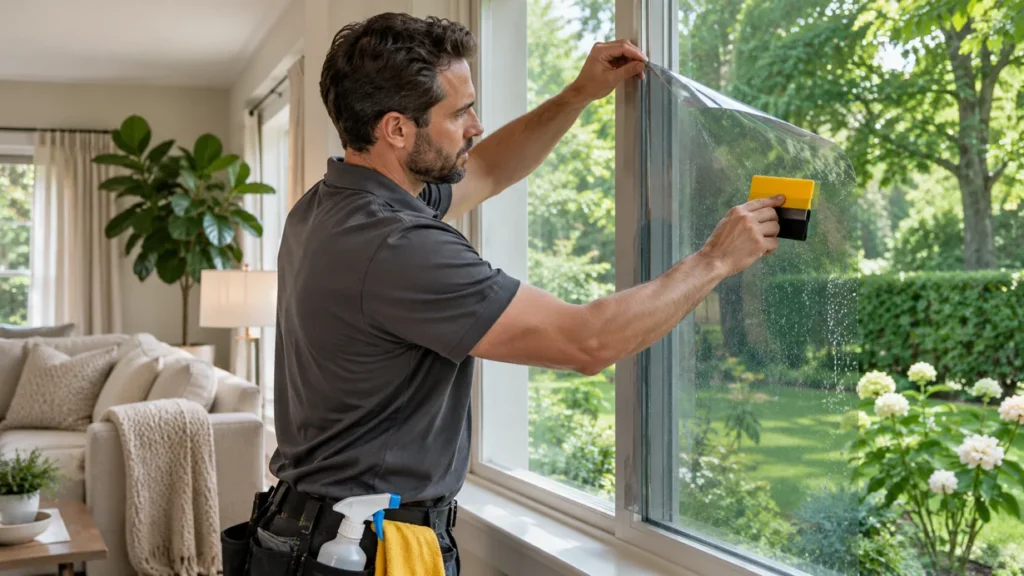
Reduce solar heat and ease the load on your air conditioner
Solar control film reduces the solar energy passing through a window by reflecting and absorbing part of it. In a room that overheats during the afternoon, a compatible film can help reduce uncomfortable hot spots and the cooling load placed on the air conditioner. The effect is especially relevant where large windows receive strong direct sunlight.
Lower cooling demand can translate into lower AC bills, but a particular saving is never automatic. Results depend on your climate, window orientation, existing glazing, film specifications, thermostat habits, and the amount of shaded glass. Solar heat gain coefficient, or SHGC, describes how much solar heat a glazing system admits; a lower value generally indicates less solar heat gain. Compare ratings for a film applied to glass similar to yours, rather than judging performance by how dark it looks.
Consider seasonal trade-offs as well. Blocking sunlight may reduce useful winter heat in a colder climate. The Building America Solution Center emphasizes matching solar control to the climate and checking film compatibility with existing windows.
Limit UV exposure without promising an end to fading
UV rejection is a separate feature from heat rejection. A film can filter ultraviolet radiation while still admitting substantial visible light, so a very dark finish is not essential for this purpose. Ask for the product’s measured UV transmission and the test information behind any advertised percentage.
Reducing UV exposure can help protect furnishings, flooring, and fabrics, but fading also involves visible light, heat, and the sensitivity of the material itself. Film should be part of a broader approach that includes sensible furniture placement and shading for delicate belongings. It cannot guarantee that a rug or sofa will keep its original color indefinitely.
Make screens and bright rooms more comfortable
Glare can make a television difficult to watch or force you to move a laptop away from the window. Film with suitable visible light transmission can soften excessive brightness while retaining an outdoor view. This may make a home office or living area more usable at the times of day when sunlight is strongest.
There is a balance to strike: a film that cuts a great deal of visible light may leave a room feeling dim on cloudy days. View samples in the intended room and compare them in different lighting conditions. Consider how the glass will look from outside, too, particularly when neighboring windows will remain untreated.
Use frosted film for dependable visual privacy
Decorative frosted film obscures clear views through glass while allowing diffuse daylight to pass. It can be useful for bathroom windows, entry sidelights, and internal glazed partitions. A full frosted finish offers broader coverage, while a band or patterned design can screen a particular sightline and leave part of the window clear.
Reflective solar film works differently. Its apparent privacy depends on the light level on each side of the glass. When the inside becomes brighter than the outside at night, people outside may be able to see in. Keep curtains or blinds for nighttime privacy if you choose a reflective product. Even frosted finishes can reveal silhouettes when someone stands close to the glass, so check a sample against your actual privacy needs.
Understand what safety and security film can do
Safety and security films use a bonded layer intended to help retain glass fragments after breakage. They may reduce the scattering of shards, but they do not prevent every impact from breaking a pane. Security performance depends on the complete assembly: the film, glass, frame, installation, and any system that attaches the filmed glass to the frame.
The International Window Film Association’s safety guidance explains that film can help hold glass in place and delay entry, especially with an attachment system. That is a limited protective function, not a promise of burglar-proof or bulletproof glazing. Ask for evidence relevant to the proposed installation and keep appropriate locks and other security measures in place.
Choose the product and installation carefully
Start with your main goal for each window. A street-facing bathroom may need frosted privacy film, while a sunny living room may benefit more from solar control. Where professional window film supply is being considered, a supplier such as Elite Window Films can be included in your research; compare technical specifications, installation requirements, and written warranties before deciding.
Have the installer identify the glazing type, including insulated units, existing coatings, and any damaged edges. The wrong film-and-glass combination can create thermal stress or affect a window warranty. Confirm compatibility with both the film supplier and window manufacturer where necessary.
Finally, ask about curing time and approved cleaning methods. Follow the product’s care instructions rather than scraping at temporary installation haze or using abrasive cleaners. With realistic expectations and the right specification, window film can make a home more comfortable, improve visual privacy, and add a useful layer of glass retention without a full window replacement.

Leave a Reply