Bed bugs are among the most stressful pests homeowners can discover. They are small, difficult to spot, and easy to move from one place to another through luggage, clothing, furniture, bags, and personal belongings. Unlike some pests, bed bugs are not usually connected to poor housekeeping. They can appear in clean homes, apartments, hotels, dorms, shared living spaces, and other places where people rest or travel.
The biggest challenge is that bed bugs often stay hidden until the problem has already spread. A homeowner may first notice small dark spots on bedding, unexplained bites after sleeping, shed skins near a mattress seam, or activity around a headboard. By then, bed bugs may already be hiding in furniture, cracks, baseboards, luggage, or nearby rooms.
For homeowners in San Antonio, Austin, and surrounding Central Texas communities, early action is important. The sooner bed bug activity is identified, the easier it is to inspect the right areas, limit movement, and begin a proper treatment plan.
Why Bed Bugs Are So Difficult to Find
Bed bugs are small, flat, and skilled at hiding. During the day, they often stay close to sleeping or resting areas. At night, they may come out to feed and then return to cracks, seams, folds, or hidden spaces.
They may hide in:
- Mattress seams
- Box springs
- Bed frames
- Headboards
- Nightstands
- Dressers
- Upholstered chairs
- Sofas
- Carpet edges
- Baseboards
- Wall cracks
- Electrical outlet areas
- Luggage
- Stored clothing
- Used furniture
Because they hide so well, homeowners may not see live bugs right away. Instead, they may notice indirect signs that something is wrong.
Early Signs of Bed Bug Activity
The first signs of bed bugs can be easy to overlook. Families may mistake them for stains, dust, lint, skin irritation, or another insect problem.
Common warning signs include:
- Small dark spots on sheets or mattresses
- Reddish stains on bedding
- Shed skins
- Tiny eggs or eggshells
- Live bugs near mattress seams
- Unexplained bites after sleeping
- Activity around bed frames or headboards
- Musty odor in heavier infestations
- Dark spotting near baseboards or furniture joints
One sign alone may not confirm bed bugs, but repeated signs should be taken seriously. Waiting can allow the problem to spread beyond the bed area.
Bites Are Not Always Reliable Evidence
Many people first suspect bed bugs because of bites. However, bites can be difficult to interpret. Some people react strongly, while others show little or no visible reaction. Skin irritation can also be caused by mosquitoes, fleas, mites, allergies, or other conditions.
Bed bug bites may appear in lines, clusters, or small groups, often on exposed skin after sleeping. But because bites alone are not enough to confirm the problem, homeowners should also look for physical evidence.
A careful inspection should include bedding, mattress seams, box springs, headboards, bed frames, nearby furniture, and baseboards.
Check the Bed Area First
Bed bugs usually stay close to where people sleep, especially in the early stages. The bed area should be inspected slowly and carefully.
Homeowners should check:
- Mattress piping
- Mattress seams
- Box spring corners
- Bed-frame joints
- Screw holes
- Headboard cracks
- Labels and fabric folds
- Bed skirts
- Nearby nightstands
- Wall areas behind the bed
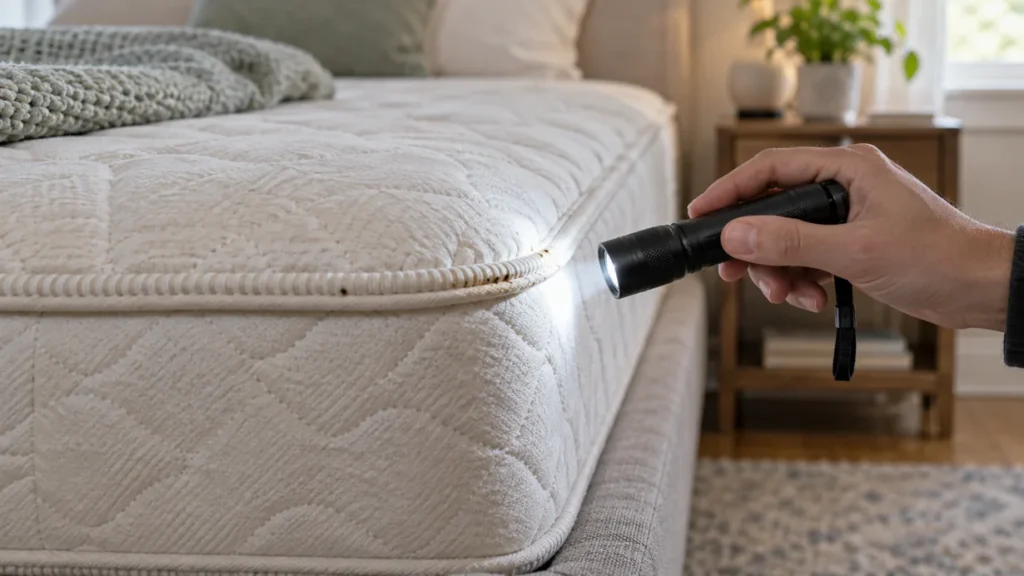
A flashlight can help reveal spotting, shed skins, eggs, or live bugs. If signs are found, avoid moving the mattress, furniture, or bedding to another room. Moving items can spread bed bugs to new areas.
Box Springs and Headboards Are Common Hiding Places
A mattress may look clean while the box spring or headboard contains activity. Box springs have folds, fabric, wooden supports, staples, and underside areas where bed bugs can hide. Headboards may have cracks, seams, decorative trim, and wall-facing surfaces that are rarely checked.
This is why bed bug inspection should not stop at the visible sleeping surface. The entire bed structure should be reviewed, especially if bites or stains keep appearing.
Furniture Near the Bed Should Also Be Inspected
Bed bugs can move into nearby furniture when activity grows or when people rest in multiple areas of the home. Nightstands, dressers, chairs, couches, and recliners can all become hiding places.
Important inspection areas include:
- Drawer joints
- Upholstery seams
- Cushion edges
- Furniture legs
- Undersides of chairs
- Cracks in wood
- Carpet edges
- Baseboards
- Behind picture frames
- Around electrical outlet plates
If the problem is not inspected beyond the bed, treatment may miss important hiding areas.
Travel Is a Common Way Bed Bugs Enter Homes
Bed bugs often spread through travel. Hotels, vacation rentals, dorms, shared housing, transportation, and guest stays can all create exposure risk.
After travel, homeowners can reduce risk by:
- Keeping luggage off beds
- Inspecting luggage seams and pockets
- Washing travel clothing when appropriate
- Drying items on high heat when fabric allows
- Checking bags before storing them
- Avoiding placing luggage on sofas or beds
- Inspecting hotel mattresses and headboards
These steps do not guarantee prevention, but they can reduce the chance of bringing bed bugs home unnoticed.

Used Furniture Should Be Treated With Caution
Second-hand furniture can be another source of bed bug introduction. Couches, mattresses, bed frames, chairs, dressers, and upholstered items may hide bed bugs in seams, cracks, joints, and fabric folds.
Homeowners should be careful with:
- Used mattresses
- Upholstered chairs
- Sofas
- Bed frames
- Headboards
- Dressers
- Nightstands
- Items left outside
- Furniture from unknown sources
A quick visual check is not always enough, but visible spotting, shed skins, or live insects are warning signs that the item should not be brought inside.
Clutter Makes Bed Bugs Harder to Treat
Clutter does not cause bed bugs, but it can make inspection and treatment more difficult. More items around the bed or floor create more hiding places and make it harder to understand how far the problem has spread.
Helpful steps include:
- Reducing items under the bed
- Keeping clothing off the floor
- Using sealed storage containers
- Removing unnecessary cardboard
- Organizing closets
- Vacuuming carefully
- Keeping sleeping areas easier to inspect
If bed bugs are already suspected, decluttering should be done carefully. Moving items from one room to another can spread activity.
Why DIY Treatment Often Fails
Bed bugs are difficult to control with quick do-it-yourself methods because they hide in tight spaces and may not all be visible at once. Spraying only the bugs that can be seen does not address eggs, hidden adults, or bugs in nearby furniture.
Common DIY mistakes include:
- Treating only the mattress
- Moving infested furniture
- Throwing items away without sealing them
- Using sprays incorrectly
- Skipping follow-up
- Ignoring baseboards and furniture
- Assuming the problem is gone after bites stop
- Waiting too long before inspection
Professional bed bug treatment in San Antonio and Austin should be based on inspection, correct identification, preparation, treatment planning, and follow-up when needed.
Preparation Is Part of the Process
Bed bug treatment often requires preparation. The exact steps depend on the home, the treatment method, and the level of activity. Homeowners should follow the pest professional’s instructions carefully because poor preparation can reduce treatment success.
Preparation may include:
- Laundering certain fabrics
- Reducing clutter
- Clearing access to walls and furniture
- Bagging selected items
- Vacuuming as instructed
- Avoiding movement of infested items
- Preparing sleeping areas
- Keeping treated areas undisturbed when directed
Preparation should be clear and realistic. Families should ask what needs to be done before treatment and what should be avoided.
Professional Inspection Helps Define the Scope
Bed bug problems can appear small while hidden activity is more widespread. A professional inspection can help determine whether bed bugs are limited to one room or whether they have moved into furniture, nearby rooms, or wall areas.
A bed bug inspection may help determine:
- Whether bed bugs are present
- Which rooms are affected
- Where activity is concentrated
- Whether furniture is involved
- What preparation is needed
- Which treatment options make sense
- Whether follow-up is required
- How to reduce future risk
For homeowners who are unsure what they are seeing, professional home pest inspection support can help avoid guessing and prevent unnecessary delays.
Bed Bugs Can Affect Businesses Too
Bed bugs are not only a residential concern. They can affect hotels, apartments, health care settings, schools, offices, dormitories, shelters, transportation settings, and other shared spaces. A single introduction can create stress, complaints, and reputational problems if not handled quickly.
Property managers and business owners should respond early when bed bugs are suspected. Waiting can make the issue more difficult to contain and may increase the number of areas that need inspection.
What Homeowners Should Avoid
When bed bugs are suspected, panic can make the problem worse. Homeowners may throw furniture away, move bedding, spray random products, or sleep in a different room. These actions can spread bed bugs or make treatment harder.
Avoid:
- Moving mattresses to another room
- Sleeping in a different room without guidance
- Placing infested furniture outside uncovered
- Using excessive sprays
- Ignoring nearby furniture
- Bringing in used furniture without inspection
- Assuming bites are the only sign
- Waiting weeks to confirm the problem
The best first step is careful inspection and professional confirmation.
After Treatment, Prevention Still Matters
Bed bugs can be reintroduced later through travel, used furniture, visitors, shared housing, or personal belongings. After treatment, homeowners should continue prevention habits.
Helpful practices include:
- Inspecting luggage after travel
- Avoiding used mattresses
- Checking second-hand furniture
- Washing travel clothing when appropriate
- Keeping sleeping areas organized
- Reducing clutter
- Watching for early signs
- Calling for help quickly if signs return
Prevention is not about fear. It is about catching problems before they spread.
Early Action Makes Bed Bug Problems More Manageable
Bed bugs are stressful, but the problem becomes more manageable when homeowners act early. The most important step is not to guess or wait. If signs appear, inspect carefully, avoid moving items unnecessarily, and request professional help.
iPest Solutions provides bed bug removal services for San Antonio and Austin. Its bed bug page explains that bed bug activity is not connected to dirty living conditions, describes bed bugs as efficient hitchhikers, and emphasizes early detection and action. The page also states that iPest uses trained and experienced staff to identify and eliminate bed bugs, with customized programs for homes and businesses using current techniques.
For Central Texas homeowners, the message is simple: bed bugs should be handled quickly and carefully. With proper inspection, preparation, treatment, and prevention habits, families can reduce the chance that a small bed bug concern turns into a larger infestation.

Leave a Reply